

How to Cultivate Globe Artichoke: A Complete Growing Guide for Beginners
If you've ever seen those large, dramatic plants at a farmers' market or in a kitchen garden and wondered how to grow one yourself — you're in the right place. The globe artichoke (Cynara scolymus) is one of the most rewarding vegetables you can grow. It's striking to look at, rich in nutrients, and surprisingly straightforward to cultivate once you understand what it needs.
Whether you have a small backyard plot, a raised bed, or a large farm, this guide walks you through everything — from choosing the right variety to harvesting your first bud. Let's dig in.
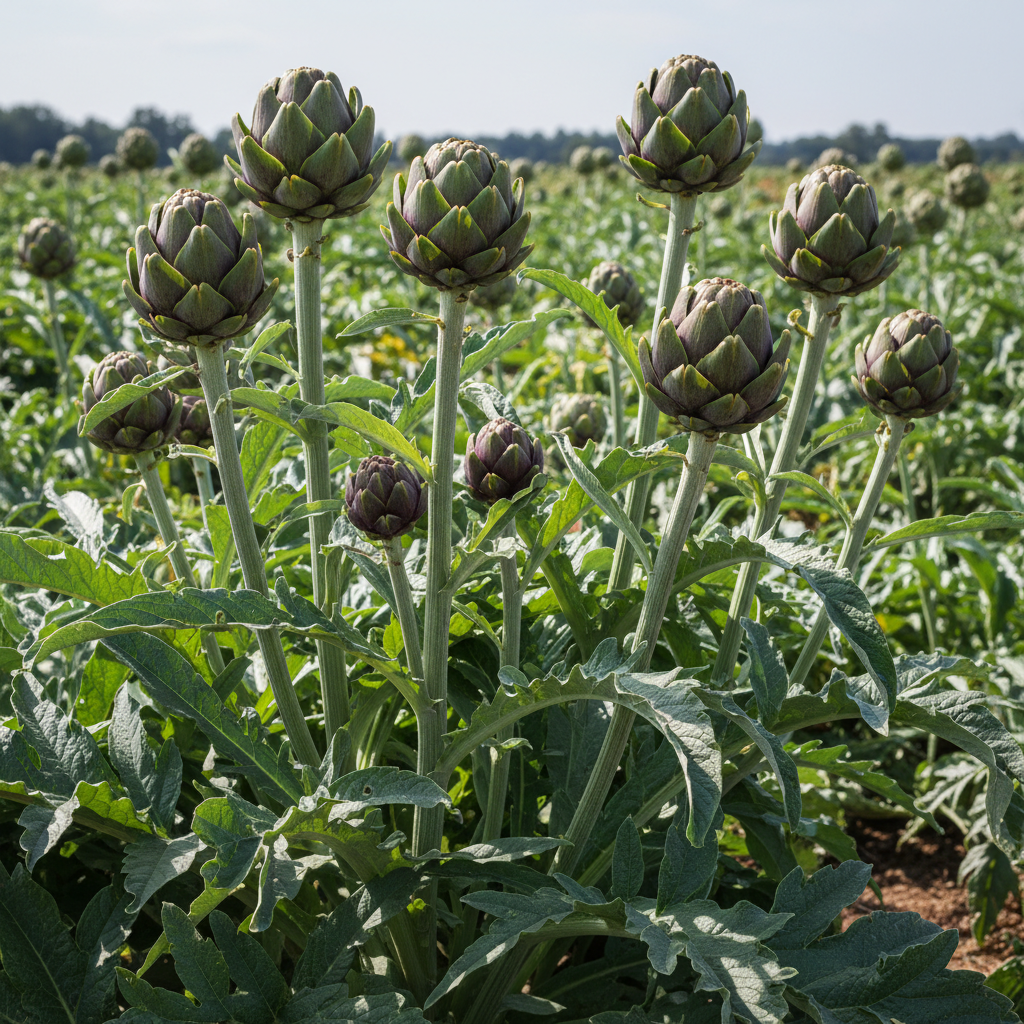
Table of Contents
- What Is the Globe Artichoke?
- Benefits of Growing Globe Artichoke
- Best Climate and Growing Conditions
- Soil Preparation
- Popular Globe Artichoke Varieties
- How to Plant Globe Artichoke
- Watering and Irrigation
- Fertilizing Your Artichoke Plants
- Common Pests and Diseases
- When and How to Harvest
- Helpful Tips for Better Yields
- Expert Advice
- Frequently Asked Questions
- Conclusion
What Is the Globe Artichoke?
The globe artichoke is a perennial vegetable that belongs to the thistle family. What we eat is actually the flower bud — harvested before it opens into a purple bloom. The plant itself can grow quite tall, up to 1.5 metres (5 feet), with large arching leaves that have a silvery-green colour.
It originates from the Mediterranean region, where it has been eaten for centuries. Today it's grown across Europe, the Americas, Africa, and parts of Asia. The edible parts are the fleshy base of the bud (the "heart") and the lower portions of the bracts (the petal-like scales). The artichoke heart is considered a delicacy in many cuisines.
Beyond the kitchen, globe artichokes are also popular as ornamental plants — their large size and dramatic form make them eye-catching in any garden.
Benefits of Growing Globe Artichoke
There are good reasons to add artichokes to your growing list. Here's what makes them worth the effort:
- High nutritional value: Artichokes are loaded with fibre, vitamin C, vitamin K, folate, and antioxidants like cynarin and silymarin, which support liver health.
- Perennial plant: Once established, artichoke plants come back year after year without replanting — saving you time and money.
- Great market value: Fresh artichokes command good prices at markets, making them a worthwhile commercial crop.
- Drought-tolerant: Once established, they can handle dry spells better than many other vegetables.
- Ornamental appeal: The plant adds a bold, architectural look to any garden or farm border.
- Bee-friendly: If any buds are allowed to flower, they attract pollinators that benefit surrounding crops.
- Low pest pressure: Compared to many vegetables, artichokes have relatively few serious pest problems.
Best Climate and Growing Conditions
Globe artichokes prefer a mild, Mediterranean-style climate — cool winters and warm (not blazing hot) summers. They are not big fans of extreme heat or hard frost, though they can tolerate light frost.
Here's what to aim for:
- Temperature: Ideal growing temperatures are between 15°C and 24°C (60°F–75°F). They can survive light frost but prolonged freezing temperatures will kill the plant.
- Sunlight: Full sun is best — at least 6 to 8 hours of direct sunlight per day.
- Humidity: Moderate humidity is fine. Avoid locations that are very wet or waterlogged.
- Altitude: They grow well at low to mid elevations. In tropical regions, higher altitudes (cooler zones) tend to produce better results.
If you live in a hot tropical climate, don't give up — artichokes can still be grown in cooler highland areas or during the cooler dry season. In regions with very cold winters, they can be grown as annuals or kept in pots and moved indoors.
Soil Preparation
Good soil preparation makes a huge difference with artichokes. They need room to grow deep roots and they don't do well in waterlogged ground.
What they need:
- Well-drained, deep, fertile soil
- Soil pH between 6.0 and 7.5 (slightly acidic to neutral)
- Loose texture — not compacted clay
- Rich in organic matter
How to prepare your bed:
- Clear the area of weeds and debris.
- Dig the soil to a depth of at least 45 cm (18 inches).
- Mix in generous amounts of well-rotted compost or aged manure — about 5 to 10 cm of organic matter worked into the top layer.
- If your soil is heavy clay, add sand or perlite to improve drainage.
- If your soil is very acidic, add agricultural lime to raise the pH. You can test your soil with an affordable kit from a garden centre or an agricultural extension office.
A raised bed is an excellent option if your native soil is poor or prone to waterlogging.
Popular Globe Artichoke Varieties
Not all artichokes are the same. Different varieties suit different climates and purposes. Here are some widely grown ones:
- Green Globe: The most popular variety worldwide. Large, round, green heads. Does well in a wide range of climates.
- Imperial Star: Bred specifically to produce from seed in the first year. Great for gardeners who don't want to wait.
- Violetto (Purple Artichoke): An Italian variety with a striking purple colour and slightly nutty flavour. Slightly smaller than Green Globe.
- Gros Vert de Laon: A French heirloom variety known for excellent flavour and cold tolerance.
- Emerald: A thornless variety popular in California, good for commercial production.
If you're a beginner, Green Globe or Imperial Star are the easiest to start with and most readily available.
How to Plant Globe Artichoke
There are three main ways to start artichoke plants:
1. From Seed
Starting from seed takes the longest but gives you the most plants for the least cost.
- Sow seeds indoors 8 to 12 weeks before the last expected frost date.
- Plant seeds about 6 mm (¼ inch) deep in seedling trays with a good seed-starting mix.
- Keep moist and at a temperature of around 21°C (70°F).
- Germination takes 10 to 21 days.
- Transplant seedlings outdoors once they're about 20 cm (8 inches) tall and the weather has settled.
Note: Most artichokes grown from seed won't produce in their first year unless you use a "vernalised" variety like Imperial Star.
2. From Offsets (Divisions)
This is the quickest and most reliable method for home growers.
- In early spring, dig up the base of an established artichoke plant.
- Separate the side shoots (offsets) that have their own roots — these are called "slips."
- Trim the leaves back by half, then plant directly in the ground.
- Water in well and keep moist until established.
Offsets usually produce their first buds in the same growing season.
3. From Container-Grown Transplants
You can buy young artichoke plants from a nursery and transplant them into your prepared bed. This is the simplest approach if you just want a few plants for home use.
Spacing: Plant artichokes 90 cm to 1.2 metres (3–4 feet) apart in rows that are 1.5 to 1.8 metres (5–6 feet) apart. They need space — they get big.
Planting depth: Set the crown just at or slightly above the soil surface. Burying it too deep can cause rot.
Watering and Irrigation
Artichokes need consistent moisture, especially during active growth and bud development. Here's how to get it right:
- Established plants: Water deeply once or twice a week. The goal is to keep the soil moist at root depth, not just at the surface.
- Newly planted: Water more frequently until the plant is well established — every 2 to 3 days.
- During dry spells: Increase frequency but always check the soil before watering. Stick your finger 5 cm into the soil — if it's dry, water.
- Avoid waterlogging: Standing water around the crown causes crown rot, which can kill the plant. Make sure drainage is good.
Drip irrigation works very well for artichokes — it delivers water directly to the roots without wetting the foliage, which can reduce fungal issues. Mulching around the base of the plant with straw or wood chips helps retain soil moisture and regulate temperature.
Fertilizing Your Artichoke Plants
Artichokes are heavy feeders. They respond well to a consistent fertilising programme.
- At planting: Work in plenty of compost or aged manure. This gives the plant a strong start.
- During the growing season: Apply a balanced fertiliser (like 10-10-10 NPK) every 4 to 6 weeks.
- When buds appear: Switch to a fertiliser higher in potassium (K) to support bud development — something like a tomato fertiliser works well.
- Organic options: Fish emulsion, seaweed extract, or well-composted manure tea are excellent organic alternatives and can be applied every 2 to 3 weeks.
Don't over-fertilise with nitrogen later in the season — this encourages leafy growth at the expense of bud production.
Common Pests and Diseases
Globe artichokes are generally quite hardy, but like any crop, they can face challenges. Here's what to look out for and how to handle it:
Pests
- Aphids: Small, soft-bodied insects that cluster on new growth and under leaves. They suck sap and can weaken the plant.Solution: Spray with a strong jet of water or apply insecticidal soap. Encourage ladybirds (ladybugs) in your garden — they eat aphids.
- Artichoke Plume Moth (Platyptilia carduidactyla): A serious pest in some regions, especially California and the Mediterranean. Larvae burrow into buds.Solution: Remove and destroy affected buds. Use Bacillus thuringiensis (Bt) as a biological control.
- Slugs and Snails: They feed on young leaves, especially after rain.Solution: Use iron phosphate slug pellets, hand-pick at night, or place copper barriers around beds.
- Earwigs: They hide in the bud scales and feed on inner parts.Solution: Trap them with rolled newspaper or cardboard filled with straw, placed near plants overnight, then dispose of in the morning.
Diseases
- Crown and Root Rot: Usually caused by waterlogged soil or poor drainage. The crown turns soft and brown.Solution: Improve drainage. Avoid overwatering. Remove and destroy affected plants.
- Botrytis (Grey Mould): A fungal disease that causes grey, fuzzy growth on leaves and buds in humid, cool conditions.Solution: Improve airspace between plants. Avoid wetting foliage. Remove affected material promptly.
- Powdery Mildew: White, powdery coating on leaves, usually in warm, dry weather.Solution: Apply a diluted baking soda solution (1 tsp per litre of water) or a neem oil spray. Ensure good air circulation.
When and How to Harvest
Harvesting at the right time is important — leave it too long and the bud opens into a flower; harvest too early and the heart isn't fully developed.
When to harvest:
- Harvest when the bud is firm and tightly closed, and the scales are still packed together.
- The central (terminal) bud at the top of the main stalk is usually the largest and ripens first.
- Buds are typically ready 2 to 3 weeks after they first appear.
- Size guide: most varieties are ready when about 7 to 10 cm (3–4 inches) in diameter.
How to harvest:
- Use a sharp knife or pruning shears.
- Cut the stem about 3 to 5 cm (1–2 inches) below the bud.
- Handle carefully — the cut end oxidises quickly. Dip it in lemon water to prevent browning if you're not cooking immediately.
After harvesting:
- Smaller side buds will continue to develop and can be harvested over the coming weeks.
- After the main harvest season, cut the plant back to about 30 cm (12 inches) to encourage new growth.
- In cold climates, mulch heavily over the crown before winter to protect it.
A well-maintained artichoke plant can produce for 5 to 7 years before it needs replacing.
Helpful Tips for Better Yields
- Vernalise for first-year production: If growing from seed, expose young seedlings to temperatures of 7°C–10°C (45°F–50°F) for 10 to 14 days before transplanting. This tricks the plant into thinking it has been through winter and encourages earlier bud formation.
- Mulch generously: A 10 cm (4-inch) layer of mulch conserves moisture, suppresses weeds, and keeps roots cool in summer and warm in winter.
- Cut back after harvest: After the main season, cut the plant to the ground (or near it). New growth will emerge for a second flush of buds in some climates.
- Renew old plants: Every 3 to 4 years, divide and replant the offsets to keep your plants vigorous and productive.
- Rotate crops: Don't plant artichokes in the same spot every year. Rotate with unrelated crops to prevent disease buildup in the soil.
- Space well: Crowded plants produce smaller buds and are more susceptible to disease. Resist the temptation to plant too closely.
- Watch the water: More artichokes are lost to overwatering than underwatering. When in doubt, wait a day.
Expert Advice
Here are insights that experienced artichoke growers tend to emphasise:
Start with offsets if you can. Experienced growers almost universally recommend starting from divisions or offsets rather than seed for home gardens. You get faster, more predictable results and the plants are true to type.
Don't skip soil prep. Artichokes are long-lived perennials. Taking an extra hour to properly prepare your bed — deep digging, adding compost, checking pH — pays off for years. Cutting corners at this stage is the most common mistake beginners make.
Learn to read your plant. Yellowing leaves often signal overwatering or nitrogen deficiency. Purple tinging on leaves can indicate phosphorus deficiency (often in cold soil). The plant communicates — pay attention to it.
Harvest often. Regular harvesting — even before buds are at their peak — actually encourages the plant to produce more. Letting buds go to flower dramatically reduces further production.
For more detailed growing guides and plant care resources, the UC Davis Cooperative Extension and the Royal Horticultural Society (RHS) artichoke page are excellent, well-researched references.
Frequently Asked Questions
Conclusion
Growing globe artichokes is one of those gardening experiences that genuinely rewards patience and preparation. Once established, these plants give back generously — producing beautiful, nutritious buds year after year with relatively little fuss.
The key things to remember: prepare your soil well, give them space and sun, water consistently (without overdoing it), and harvest regularly. Whether you're growing for your own kitchen, for sale at a local market, or simply to add something impressive to your garden, artichokes are well worth the effort.
If you're just starting out, pick up a couple of offsets or a pot plant from a nursery, get them into good, prepared soil, and give them time. You might be surprised how quickly they take off.
Happy growing — and enjoy the harvest.
Have questions about growing artichokes? Drop them in the comments below. At Agricpedia, we love hearing from growers at every level.